



Project Arrow Vector and Borealis : Canadian innovation propelling electrification into the future
Montreal, February 13, 2026
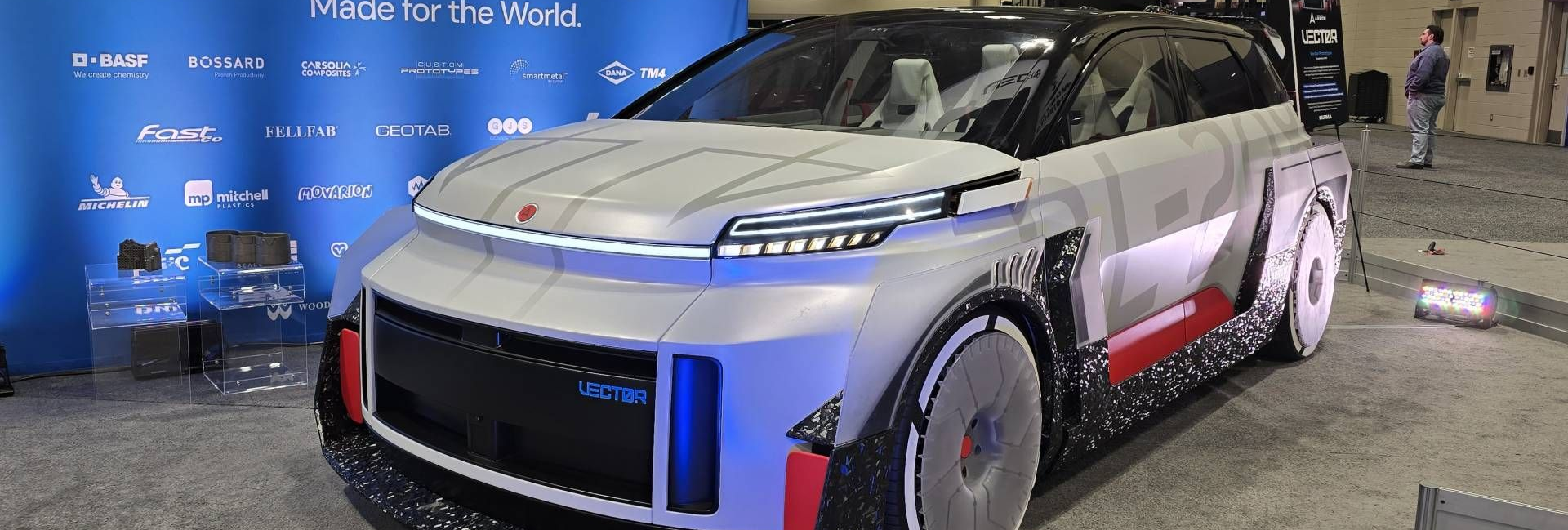
The development of electric vehicles (EVs) continues to accelerate in Canada, and Project Arrow is one of the most inspiring examples. Launched by the Automotive Parts Manufacturers Association (APMA), this project reached a new milestone with the unveiling of the Project Arrow Vector and Borealis prototypes at the 2026 Toronto Auto Show, incorporating cutting-edge technologies and highlighting Canada's industrial potential in the field of zero-emission vehicles.
But beyond the buzz surrounding these prototypes, the evolution of the EV market has direct consequences for essential infrastructure that must adapt: namely, charging solutions for residential buildings, particularly condos and multi-unit complexes. As a company specializing in the installation of electric vehicle charging stations, understanding this dynamic is key to seizing growth opportunities – for both property developers and building managers.
1. The Canadian ambition behind Project Arrow
Launched with the goal of demonstrating that Canada has the technical, industrial and collaborative capabilities to design a world-class electric vehicle, Project Arrow is a collective effort of dozens of companies, academic institutions and national suppliers.
After an initial version unveiled in 2023, the project is now entering its 2.0 phase, marked by the presentation of two new prototypes:
- Project Arrow Vector: a near-production platform designed for the roads of 2030, incorporating a lightweight chassis manufactured via artificial intelligence and 3D printing, a 650 horsepower electric powertrain and a range of around 550 km.
- Project Arrow Borealis: a futuristic vehicle designed for level 5 autonomous driving, with an estimated range of 1500 km and the ability to interact with smart urban infrastructure.
This second prototype, almost "science fiction", illustrates the direction that mobility systems could take in the 2040s, by integrating vehicles, infrastructure and connected technologies on a large scale.
2. What does this innovation mean for EV adoption in Canada?
The creation of prototypes like Vector and Borealis goes far beyond a simple exercise in style: it influences the entire ecosystem around electric vehicles.
a) A proof of concept for a local supply chain
While these concepts are not yet commercial vehicles, they demonstrate that over 80 Canadian suppliers and partners can provide essential EV technologies – batteries, electric motors, smart components, and connected systems. This national collaboration encourages major manufacturers to source their components here, thereby boosting demand for electric products, including EV charging stations in residential settings.
b) Electrification as the standard rather than a niche
With electric vehicles becoming increasingly efficient (longer range, partial or full autonomous driving), EV adoption will accelerate in urban areas. This means that owners and managers of condos or multi-unit residential complexes will need to integrate electric vehicle charging solutions to meet growing demand.
3. Electric vehicle charging stations for condos & multi-unit dwellings: a necessity, not a luxury
As the EV fleet grows, the need for charging infrastructure becomes essential in the residential real estate sector. However, installing charging stations in a building is not simply a matter of purchasing equipment – it's a strategic approach.
a) Why B2B installers see an opportunity
Residents expect to be able to charge their cars at home, especially where public charging stations are limited or heavily used. The reality:
- People living in multi-unit dwellings or condos do not always have easy access to a public charging station.
- Providing private charging stations increases the perceived value of units, attracts buyers or tenants looking for convenience, and prepares the building for future electrification standards.
Thus, as a company specializing in the installation of charging stations, you are at the heart of a transformation that directly supports the long-term adoption of electric vehicles.
b) Charging solutions adapted to actual needs
When a property developer or manager considers electrifying a building, several technical and regulatory aspects must be taken into account:
- Analysis of the building's electrical capacity
- Terminal sizing (level 2 vs level 3)
- Intelligent load management to avoid peaks and high costs
- Integration with billing systems
- Local standards and compliance
Offering this type of turnkey service – from the preliminary study to the installation, including permit management and after-sales service – positions your company as a strategic partner for buildings wishing to modernize their EV infrastructure.
4. A growing trend: electric vehicle charging stations as a residential standard
While projects like Project Arrow demonstrate innovation in the very design of electric vehicles, the reality on the ground indicates that the need for charging stations in multi-dwelling units will become the norm. Several factors are accelerating this trend:
- Government objectives for a transition to clean mobility (e.g., standards aiming for a significant share of EV sales in the coming years).
- Financial incentives available for the installation of charging stations (credits, local/federal subsidies).
- Social and environmental pressure to reduce greenhouse gas emissions.
Developers who integrate charging solutions from the design stage (rather than adding them later) achieve significant savings and improve the attractiveness of their projects.
5. How your business can benefit from this EV shift
As an installer of electric charging stations, your value proposition is part of a rapidly growing market.
Here's how:
a) To offer solutions tailored to the specific challenges of condominiums
Unlike single-family homes, apartment buildings have more complex electrical and logistical constraints. By offering:
- On-site electrical audits to determine charging potential.
- Modular solutions to suit different needs (shared terminals, dedicated terminals, fleet of units).
- An intelligent energy management service that prevents power surges and optimizes charging.
You transform a technical need into a competitive advantage for your customers.
b) Supporting promoters in the long term
The implementation of charging infrastructure is not a one-off project: it is an evolving strategic process, integrating:
- Maintenance and technical support.
- Future upgrades of the terminals will be made according to technological advancements.
- Integration with connected load management platforms.
This type of comprehensive service is what managers concerned with ensuring the long-term viability of their investments are looking for.
6. Conclusion: An electric future... well connected
While Project Arrow Vector and Borealis present an ambitious vision of what could define mobility in Canada in the 2030s and 2040s, the rapid adoption of electric vehicles is creating a structural demand for EV charging solutions, particularly in condos and multi-unit residential complexes.
For B2B companies specializing in the installation of electric vehicle charging stations, this represents a unique opportunity to play a central role in the residential energy transition by offering:
- Electric charging station installations adapted to the specific needs of buildings.
- Technical expertise to maximize energy efficiency and resident satisfaction.
- A strategic added value to real estate projects.
As Canada positions itself as a leader in clean automotive innovation, it is clear that EV charging infrastructure – and those who install it – will be key players in this electric revolution.